


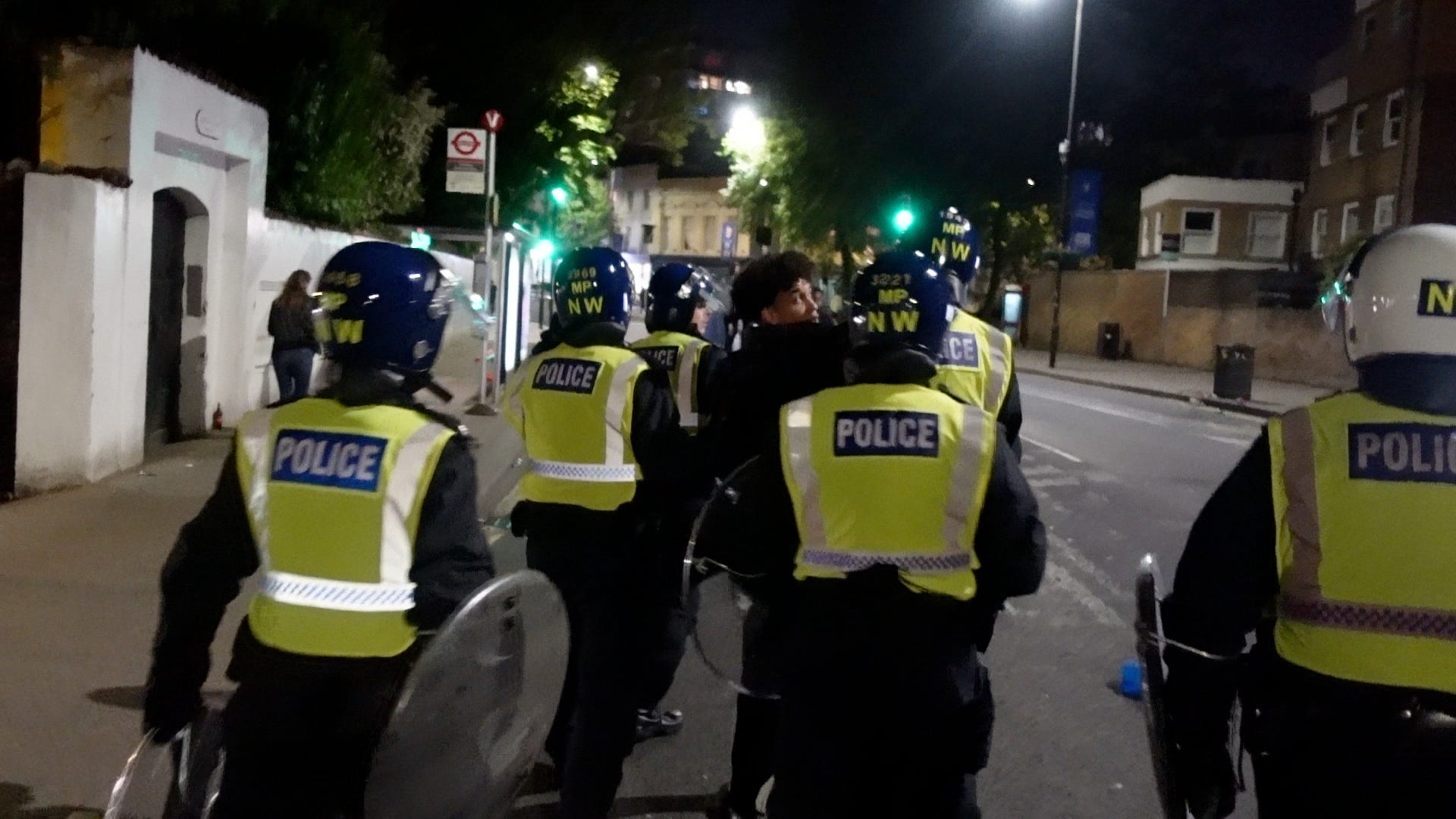
30 May 2021 · around 01:10 · Fulham Road, London — the first page.
I am not a victim nor a victor, per se — merely an observer who believes everything done in the dark must come to light. I am not crying wolf; for all I know, I might be the wolf himself.
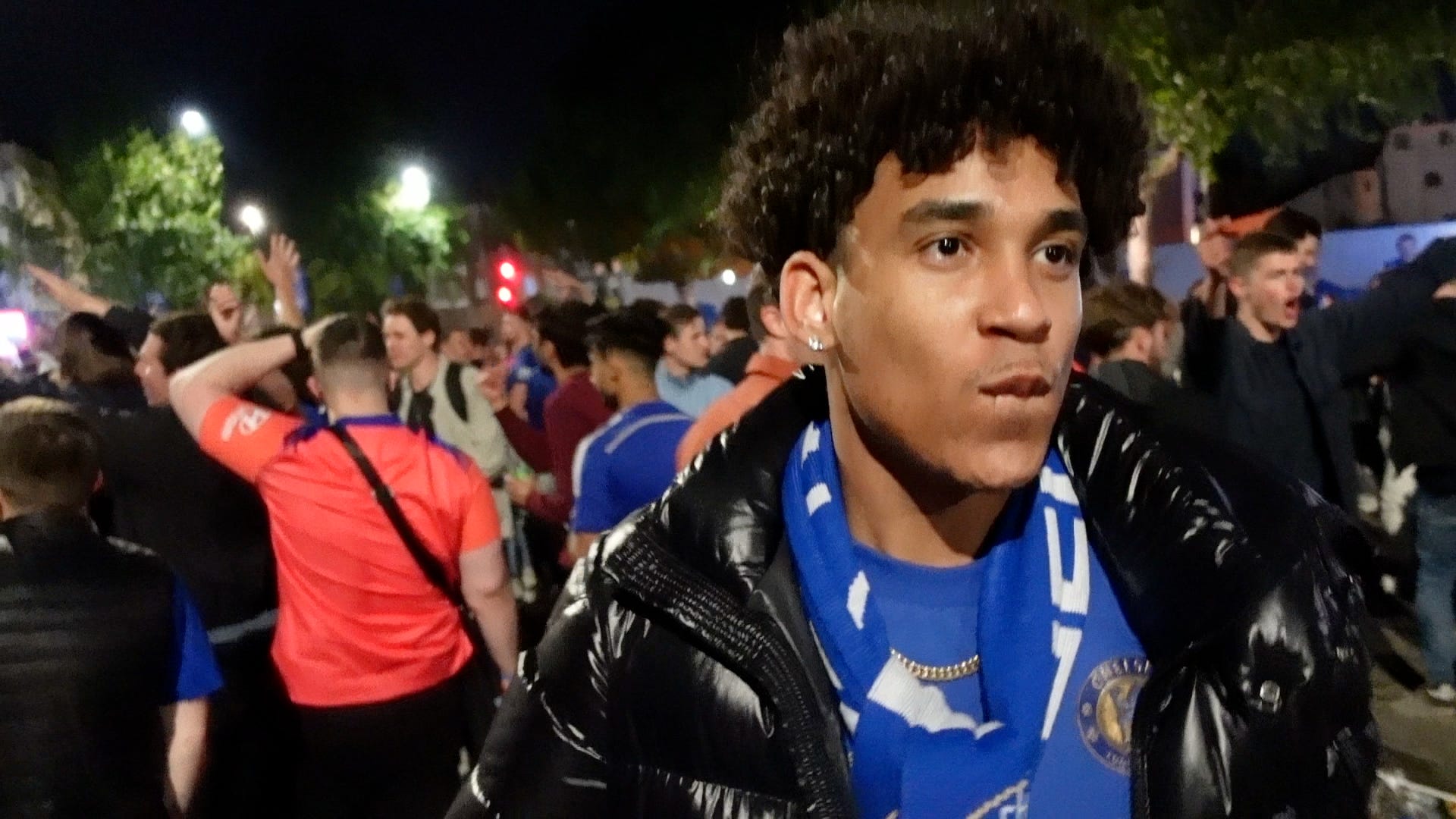
30 May 2021 · The same night, minutes earlier — the person, before the file.
I have both benefited from institutions attempting — or claiming — to assist me, and been at their behest and disposal internationally, at the expense of my health: mentally, physically, even spiritually. Similarly, I have been in the public light, infamous for altercations I systematically find myself in. My prerogative is not to cry a river of denial in Egypt, but to set alight the predicament I find myself in — to shed light so it may burn: not my thesis, but lived experience. I want to be refined by fire, not make fire my enemy.
The question I ask myself is whether I am truly, really free when the so-called protection I receive becomes a trade-off of my freedom — let alone my agency. Am I being punished for not choosing to fall in line, or is this escapade of mine an ego-trip with merited consequences?
The internet has beaten me to the punch. The receipts do speak for themselves.
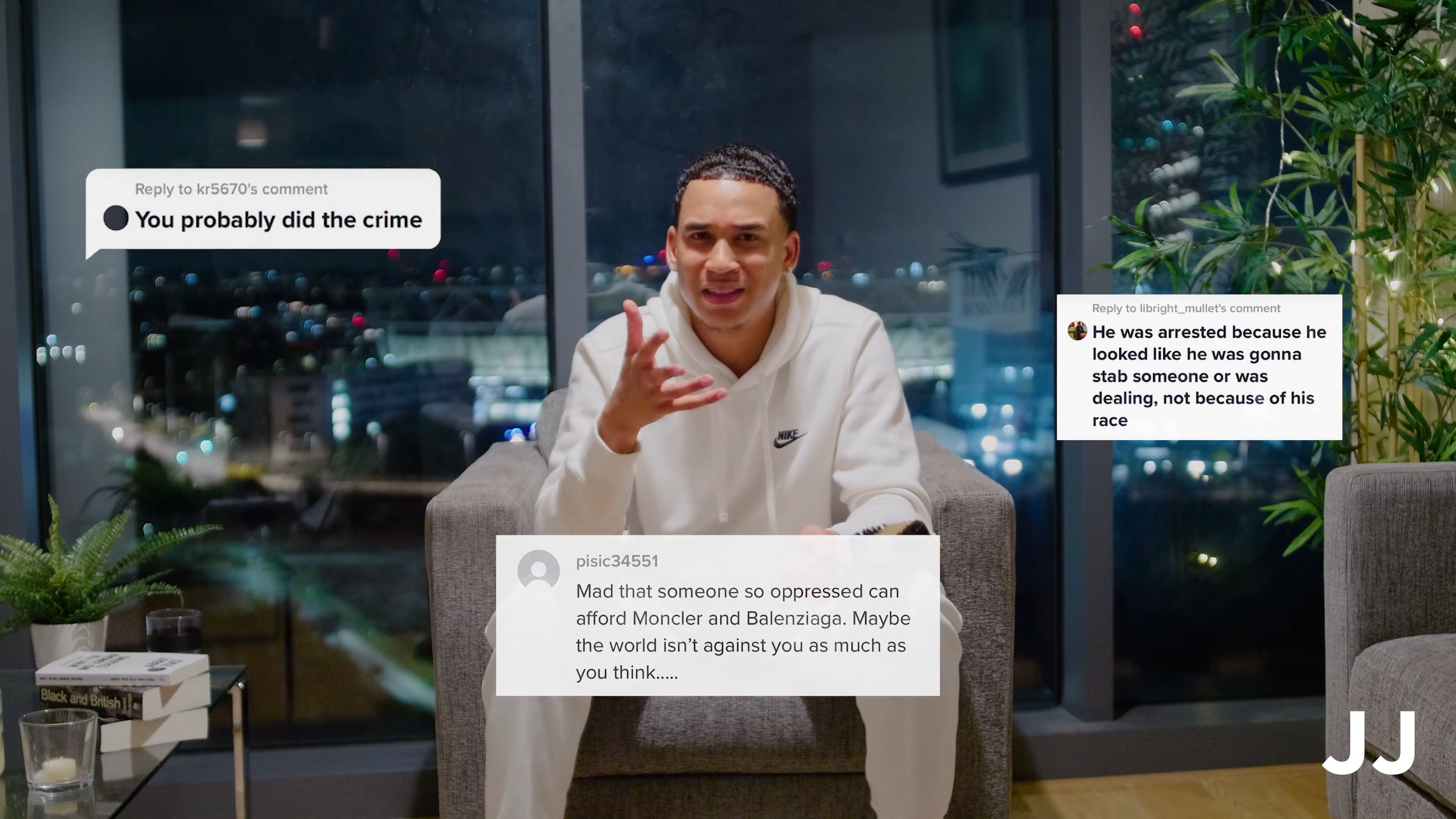
October 2021 · The counter-narrative — real replies to disputed footage circulating online.
Even so
Even so: am I really free when the institutions sworn to protect me subject me to questioning my own sense of reality, my integrity, let alone my dignity? Hijacking my human rights — my birthright, especially freedom of movement — is not only excessive; it is extremely primitive.
My middle name is Immanuel. Not only does it mean God with us — it reminds me of Kant1, who argued that freedom is a birthright, not a favour graciously granted by those claiming to protect us. Separately, do I even have the right to bear physical arms when prohibited from contemplating freely with the very mind that controls them?
Moreover: how can a system — in healthcare and in policing alike — protect an individual who does not conform to its decaying ideologies? Am I being tolerated or more so sectioned? Are there others? Or are others, in actual fact, simply being safeguarded from me? Are they diluting my sense of self, brick by brick, in order to build themselves back up — through journals of justification, by the patronisation of someone deemed to be lesser?
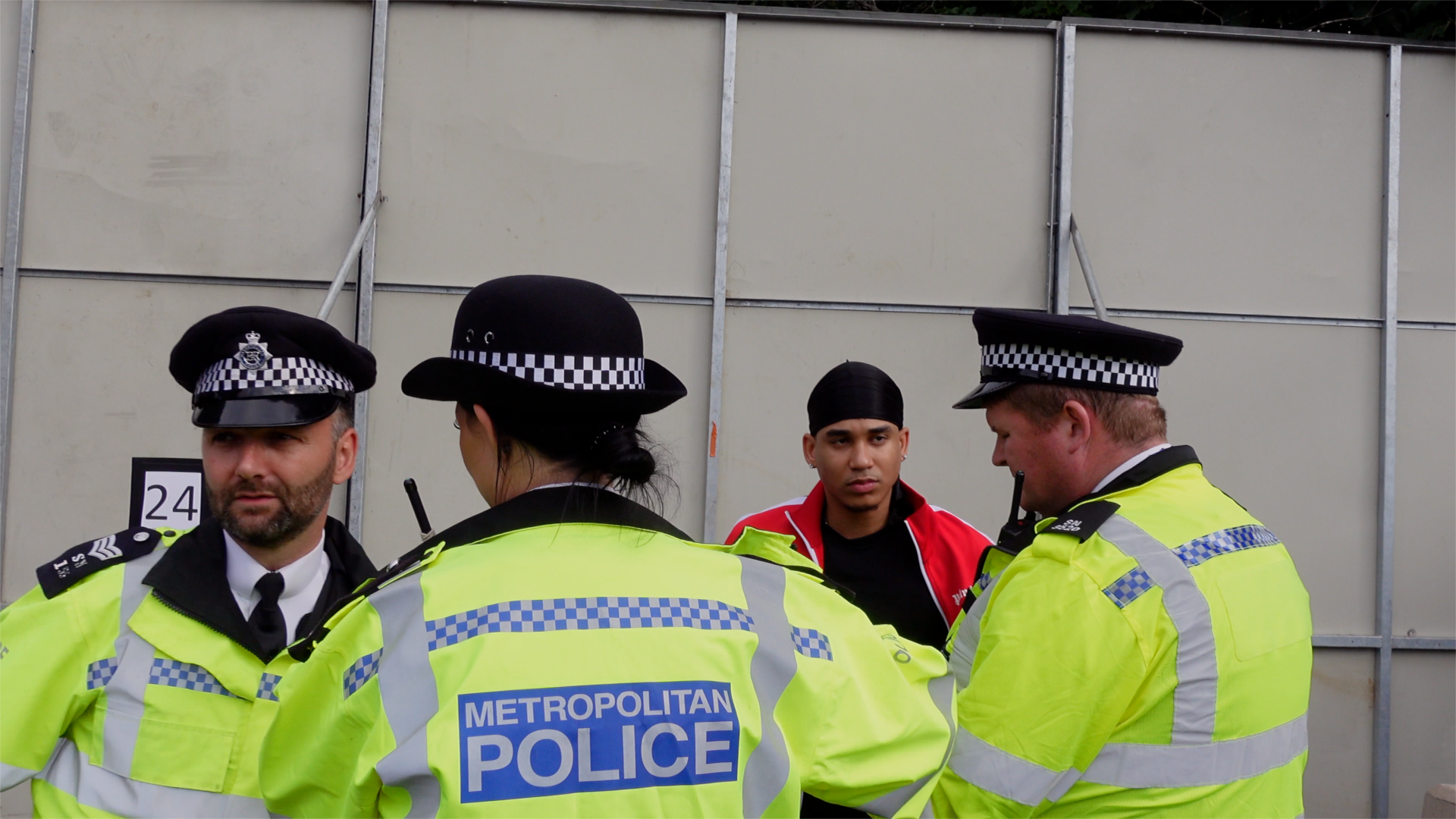
September 2021 · For the record. Before I even got to press the button, the camera was running.
Rome was not built in a day; in fact, it is still being built. Institutions are brought back to life by annexing the opposition — or potential adversaries — let alone preying, and praying, on the weak for that matter so that they themselves seem strong. I understand that what is Caesar’s belongs to Caesar, unequivocally. The playing field is not level nor has it ever been — it is authored to be unequal. Even so, does Caesar merely demand my income, or is he now craving my intellect as well? Capitalising on my insecurities and projecting deficiencies is clearly and abundantly an overstep — reaching not only for my coin, but for my ability to earn that said coin.
Writing back - the reply, finally.
I did not invent this position. There is a sacred lineage of individuals once written about by institutions who consequently write back verbatim. Oscar Wilde composed De Profundis2 whilst in captivity at Reading Gaol; each completed sheet was withdrawn by the prison and held. He wrote knowing the state took custody of every page before he wrote the next, and would only read the thing whole once it was finished. To a certain extent, many of us have had to compose a body of work under observation of sorts. Personally, I hold the records that were written about me without me, and I have learned that holding them is not the same as being held by them. Wilde and I share a birthday. I take that as a coincidence with good taste.
And there is a more subtle lineage ever-emerging — the diary filmmakers: Chantal Akerman, David Perlov, Jonas Mekas3. Each turned the lens on themselves not out of vanity but because the alternative was being subdued in someone else’s language. That sentence is the whole of my method. The archive this film is cut from exists because, at a certain point, the only account of me being written was somebody else’s — and I declined to let it stand alone.

April 2021 · London · The argument existed on tape before the events it now frames.
Twice on tape
The title of the film was never a slogan. It was recorded before it was a film — twice, in the same voice, nine months and one hospital apart.
“So when people tell me slavery is over, I’m like — is it really? Because am I really free?”
— October 2021 · Addressing the Chelsea Incident · Olympic Park, East LDN
“It feels like freedom. But then I’m like — am I really free?”
— July 2022 · Straight after Hospitalisation · Westfield Stratford City
October 2021, before any ward existed in my story. July 2022, straight after being given a clean bill of health from one. Same four words. The film’s entire method lives in that arithmetic: when the same sentence arrives in the same voice across years, the audience does the maths without narration. Nobody has to argue that the person stayed continuous. The tape does it.
The question
In all honesty, I am not trying to tear down the systems invented to “protect” — that has already occurred, and it has been my downfall - in many ways. I am not requesting reparations; I am becoming, and embodying, the very reparation needed. And yes — by asking alone, I then become the question mark itself. Earnestly, a question is not an attack but a Trojan horse. Is it permissible, to any extent imaginable, to even utter the mere fact of whether I have the right — or left — in asking:
Am I Really Free?
— Joshua Immanuel Nyamekye Arthur
“Am I Really Free?” premieres 1 October 2026 · jjdreamss.com/film
Testimony, not fabrication.
Immanuel Kant, The Metaphysics of Morals (1797), Doctrine of Right, Introduction §B (Ak. 6:237). Kant’s position: freedom — understood as independence from being constrained by another’s choice, so far as it can coexist with everyone else’s freedom under universal law — is the single innate right belonging to every person by virtue of their humanity. Every other right is acquired. This one is not. It is not granted, and therefore cannot be withdrawn as a favour. Further reading: plato.stanford.edu/entries/kant-social-political/
Wilde wrote De Profundis in Reading Gaol between January and March 1897, permitted by the governor Major James Nelson, who had replaced Colonel Henry Isaacson in July 1896 — Isaacson being the man Wilde described as having the soul of a rat. Nelson believed writing would be more restorative than prison labour. The letter was authorised “for medicinal purposes” and Wilde was not permitted to send it. On 4 April 1897 Nelson reported to the Prison Commission that each sheet was numbered before being issued to Wilde’s cell and withdrawn each evening. Nelson returned the completed manuscript to him on his release, 18 May 1897. Wilde entrusted it to Robert Ross, who published a heavily cut version in 1905; the complete and correct text did not appear until 1962. Sources: Colm Tóibín, “The Road to Reading Gaol,” London Review of Books, 2017 · en.wikipedia.org/wiki/De_Profundis_(letter)
Chantal Akerman, News from Home (1976) — long static takes of New York City under voice-over of letters her mother sent her between 1971 and 1973, when Akerman was living there in her early twenties. David Perlov, Diary (1973–1983) — six 52-minute chapters, roughly five and a half hours, begun when Perlov bought a cheap 16mm camera and started filming daily life and national events from his Tel Aviv window, after finding himself shut out of the Israeli film establishment. Jonas Mekas, Walden: Diaries, Notes and Sketches (1969) and Reminiscences of a Journey to Lithuania (1972). Three exiles, one method: film the ordinary continuously and let the record become the argument.