


THE THESIS: Bill Gates Doesn't Need Drip. I Do.
“It is only shallow people who do not judge by appearances.”
— Oscar Wilde1
To set the scene, I was wearing a full-white tracksuit, whilst viewers could see the London Skyline — forming a backdrop behind me. After being released on bail, I was to finally address around 200k followers on what had actually transpired. This moment had been brewing for a while, October 2021, the audience was raring to go, however I was not.
Only five months prior to filming — May of 2021 — I was accused of allegedly being part of a “gang” organising attacks against the police. Consequently, I was “identified” on Fulham Rd by my “shiny black puffa”. Wilde conveyed an aesthetic philosophy; the Metropolitan Police weaponised the same logic, mistaking my jacket for illicit affiliation. What stayed with me took years to state clearly; it was never about the clothes to begin with.
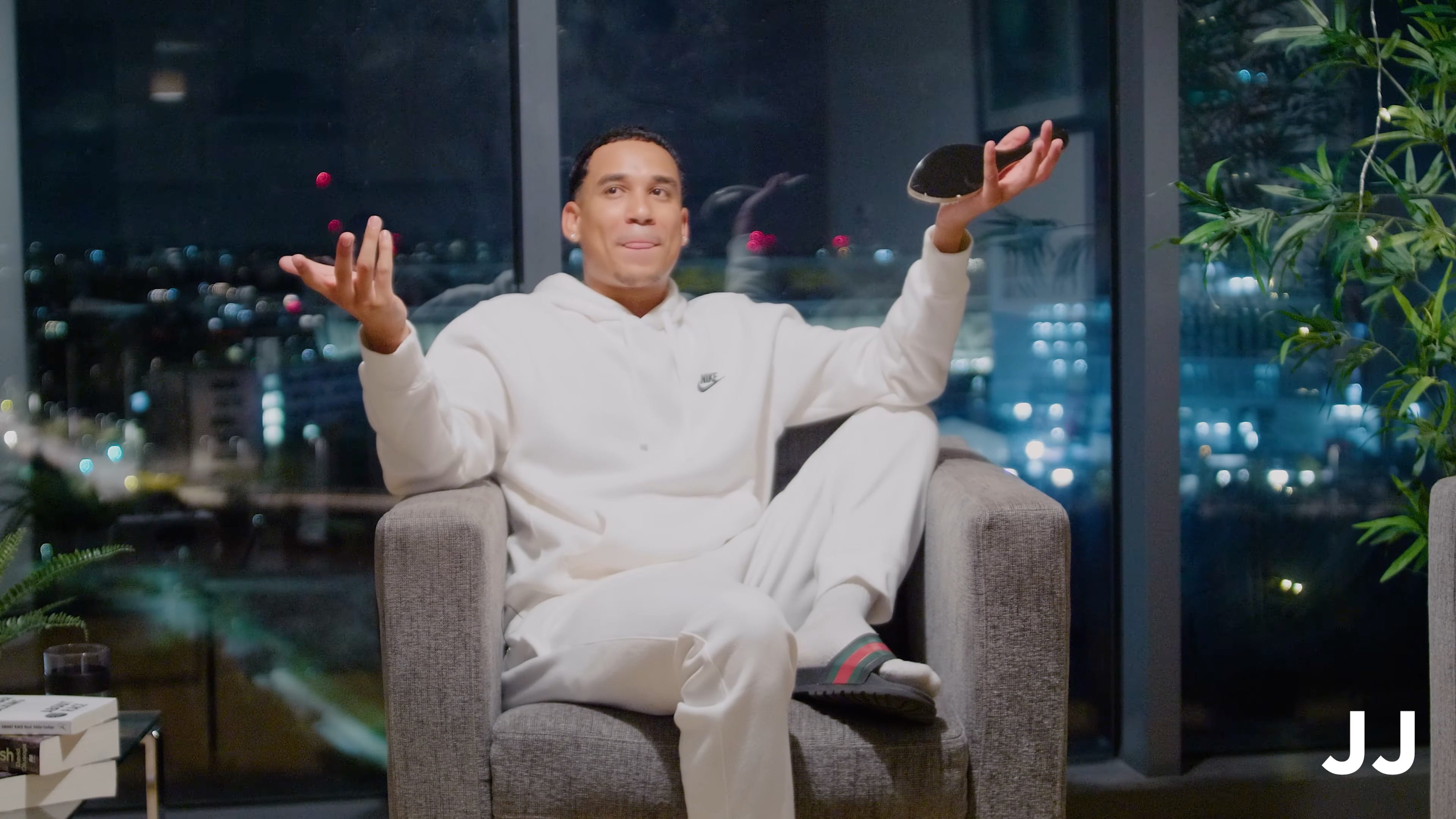
Here is what I said:
“If we look at people like Bill Gates, he gets praised for wearing modest clothing, for quote-unquote underdressing. But people are forgetting the fact that his white privilege allows him to underdress — because society still places value on him as a human being.”
WHAT NOBODY SAYS ABOUT THE WHITE T-SHIRT
There is an entire genre of admiration for rich men who dress plainly.
The billionaire in the grey T-shirt. The founder in the black turtleneck. The tech guy in the queue at a burger place like a normal person, photographed, shared, captioned this is what real success looks like.
Look at how humble he is.
Humility is a choice to lower yourself. It only exists as a virtue if you had somewhere to fall from and something to lose by falling.
So ask what he actually risks.
He walks into any room on earth underdressed and every single person in it still reads him as valuable. The plain T-shirt doesn’t cost him status — it demonstrates that his status is unconditional. It’s a flex so total it looks like modesty. I do not need the signal. The signal is me. That is not humility. That is the highest possible confidence in your own legibility.2
AND NOW PUT ME IN THE SAME T-SHIRT

Now put a Black man in the identical white T-shirt, in the identical queue, at the identical burger place.
Nobody photographs him. Nobody captions it. Nobody in this society reads him as successful.
He is not underdressed. He is just dressed. However, he does not get the luxury of being unread: before he opens his mouth, he has already been interpreted.
So the plain T-shirt is not a neutral garment. It is a test that only returns a positive result for people who were already passing.

WE BUY THINGS THEN WE GET SHAMED FOR IT.
If society will not assign you value, you go and acquire objects that society has already agreed carry value, and you place them on your body. Not out of greed. Out of translation. Economists have had a name for this since 1899.3 I named the trap it creates — underdress and you're invisible, dress and you're a fraud.
I said on that same tape: “Black men deal with trauma by getting rich”. I stand by it. It is not a compliment to anyone.

And then the receipt arrives.
The instant it works — the instant the coat is good enough that people look — the verdict flips.
Why are they flashing?
Why the designer?
How can someone who says they’re oppressed afford that?
I have had that comment sent to me personally, in writing, more than once.
The plain T-shirt doesn’t read as “humble” on me; it reads as “unimportant”, and the moment I add value-coded objects to my body, the verdict flips to “excessive”. The man in the white T-shirt is allowed to step outside the dress code and be praised for it. I step outside the dress code and become the dress code.
Guilt, tailored.
“BUT ISN’T THAT A CONTRADICTION?”
The pushback is always the same, so let me answer it in the words I spoke the first time, they still stand:
“I honestly don’t think it’s a contradiction. Regardless of what I’m wearing — or regardless of what any oppressed person is wearing — that does not contradict their oppression. In many ways it goes hand in hand.”
Wearing designer does not protect me from anything. A Gucci cap has never once de-escalated a stop, quite the opposite. Nothing I have ever bought has interrupted a single institutional decision made about me.
That’s the quiet joke at the centre of the whole thesis: the objects work on strangers and they do not work on systems.
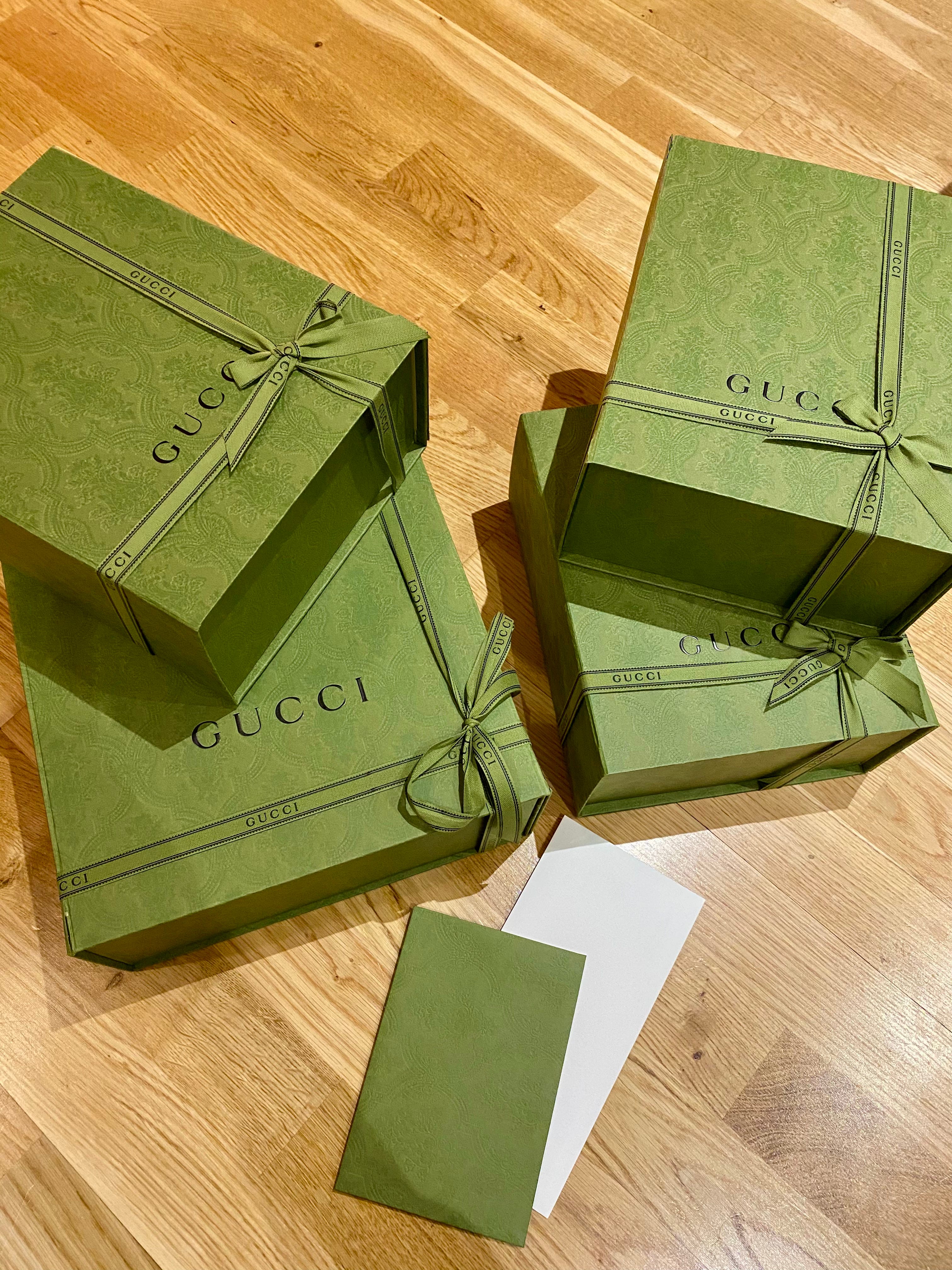
On the street, a good coat might win you half a second of hesitation, just long enough for a stranger to slot you into a safer category. Inside a system, that same coat is invisible. Forms don’t have a field for “looked expensive”. Algorithms don’t weigh “clean trainers” as evidence. A billionaire’s white T‑shirt and my jacket are both background noise to the machine that actually decides.
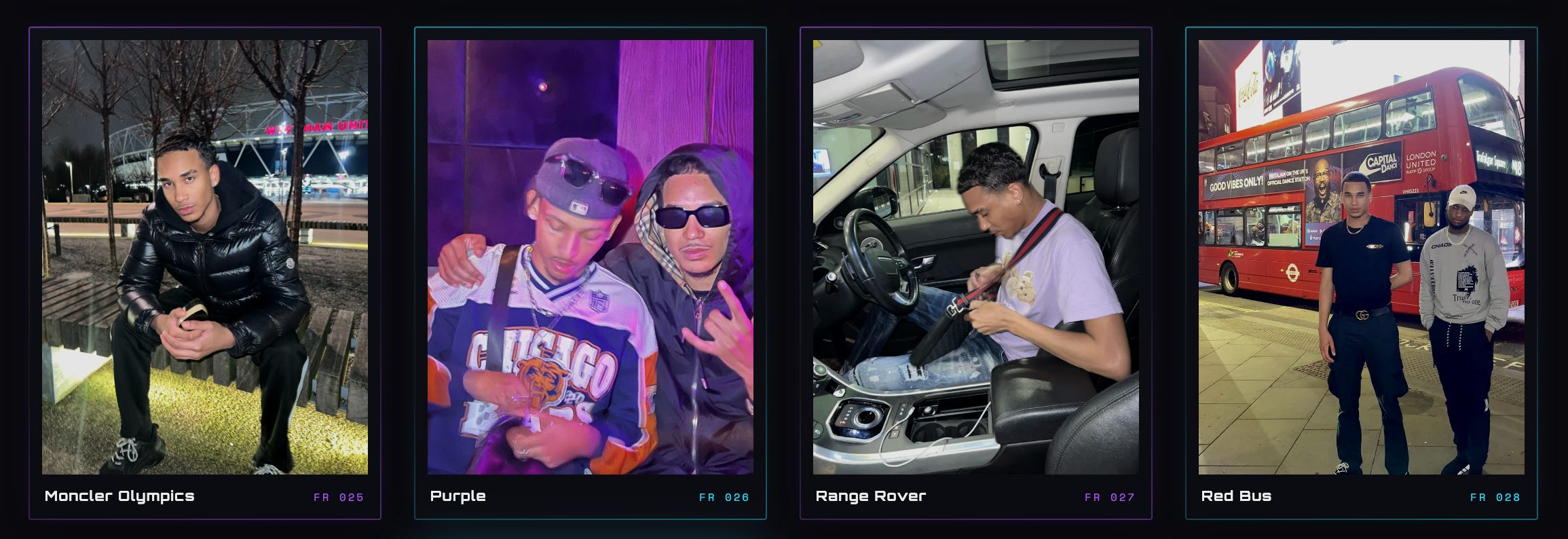
There is a softer version of this that people like better, and it is the one I refuse. Retail therapy. The problem is not that the phrase is wrong. The problem is that for some of us, retail is the only therapy we are offered. The systems that harm you will not admit they harmed you, let alone fund your recovery. They will sell you coping mechanisms instead. Ultimately: we buy the remedy, and then get punished for owning it. I am not saying nobody should buy anything. I am saying watch who gets told that shopping is their self-care and who gets offered alternatives.
THE DRIP AS RECEIPT
When I wear designer, I am not trying to trick anybody into thinking nothing happened.
The coat is not a denial. It is a receipt. It says I survived enough to be here at all, in a world that tried to remove me from the queue.4 Here's the paper trail.
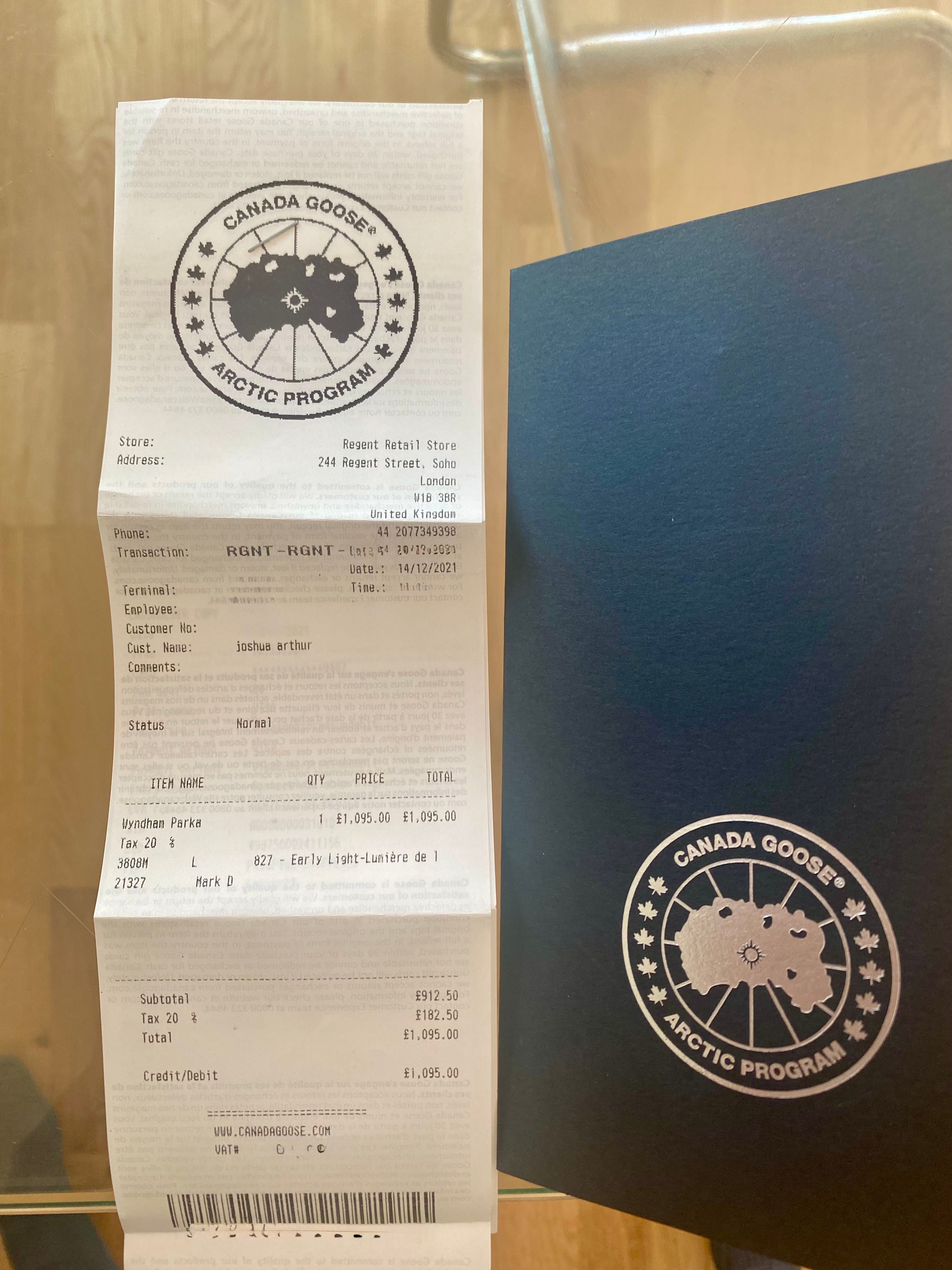
It is also, and I have to name this, evidence of the contradiction the comments keep throwing at me. I have been harmed and I look expensive. People do not know how to hold both truths at once. So they choose the easier story: if he was really oppressed, he wouldn’t be able to afford that. My attire is the thing that got me seen, and the thing people use to justify not seeing the system at all.
Fraud in designer. That's the whole indictment.
EVEN SO
I am aware this strategy fails and I still play it. I know the coat is a translation into a language that shouldn’t be the language. I know participating in the value system is, in some measure, funding it. I know a genuinely free man wouldn’t need to translate himself through fabric at all.
Insidiously, class runs beneath all of this like a second price tag. If value can be bought, the people who can't afford it are disqualified twice over5 — once for their appearance, once for what they earn. Any argument that ends with just invest in timeless basics has already decided who counts.
I wear it anyway. Sometimes because it’s armour, sometimes because it’s beautiful, sometimes because I’m a person who likes clothes and not every act by a Black man is a political manoeuvre. That last one is its own trap — the assumption that everything I do is a statement is exactly the surveillance I’m describing.

I don’t have the fix. I have the description emphasising the issue of class. The machine has already decided what a billionaire’s white T-shirt means — and what my jacket does: humility for some, evidence against others.
AM I REALLY FREE?
He can wear nothing and be read as everything. I can wear everything and be read as nothing. So tell me again which one of us is being humble.
— Joshua Immanuel Nyamekye Arthur
“Am I Really Free?” premieres 1 October 2026 · jjdreamss.com/film
Testimony, not fabrication.
Lord Henry Wotton speaks this line to Dorian in Chapter 2, articulating the novel’s aesthetic philosophy that appearances constitute the only knowable truth. Wilde later complicates the claim as the story reveals the moral cost of Dorian’s own obsession with the surface — a tension this essay deliberately borrows. Oscar Wilde, The Picture of Dorian Gray, ch. 2 (1891 book edition; the line first appeared in the 1890 Lippincott’s Monthly Magazine text).
Feltovich, Harbaugh & To’s game-theoretic model of countersignalling demonstrates that only agents whose high status is already common knowledge can afford to drop a signal without being mistaken for a low-status agent — dropping the signal is itself only legible as a flex when the underlying status isn’t in question. This is the exact mechanism this essay describes without the equations: Gates’s T-shirt “works” as understatement only because the room has already priced him correctly. Put a body the room prices incorrectly in the same shirt, and the countersignal simply reads as the truth — low signal, low status assumed. Feltovich, Harbaugh & To, “Too Cool for School? Signalling and Countersignalling,” RAND Journal of Economics 33(4), 2002.
Veblen coined “conspicuous consumption” in 1899 to describe how visible spending functions as a leisure-class status signal rather than a reflection of taste or need. This essay’s central claim — that the jacket is “a sentence in a language the room already speaks” — is Veblen’s thesis relocated 127 years forward and onto a Black body, where the same signal that once proved leisure now has to prove humanity first. The Theory of the Leisure Class (1899).
I made a version of this argument academically six years before I made it personally. In “Value Creation vs Value Extraction” (BUS130, 2020), I argued that markets routinely misprice value when the signal of value and the substance of value are evaluated by different, unaccountable observers — the coat, the tracksuit, and the jacket in this essay are that same mispricing wearing a body instead of a balance sheet. “Value Creation vs Value Extraction,” graded 83% → jjdreamss.com/academic.
Charles, Hurst & Roussanov’s empirical study finds that visible-goods spending (clothing, jewelry, cars) functions disproportionately as a status-signalling mechanism precisely where other channels of status recognition — income history, education, family wealth — are less legible to observers, a pattern the paper documents along racial lines. This is the “receipt” argument in data form: when a system won’t extend you credit on your existing status, you purchase the only currency it will read at a glance. Charles, Hurst & Roussanov, “Conspicuous Consumption and Race,” Quarterly Journal of Economics 124(2), 2009.