


THE THESIS: Bill Gates Doesn’t Need Drip. I Do.
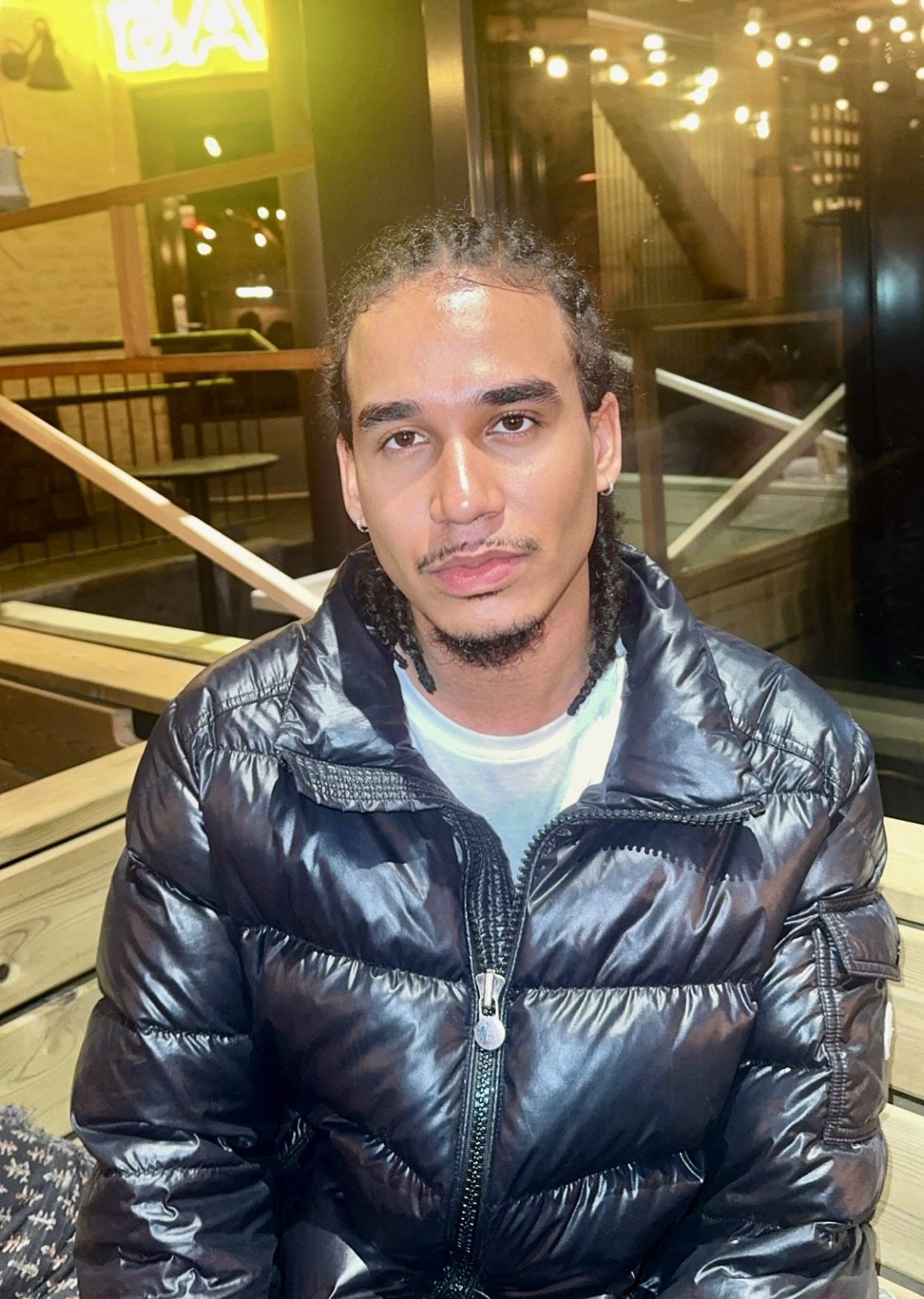
This might sound trivial. For me, it became unavoidable. In May 2021 I was arrested outside Stamford Bridge in London — picked out of a crowd, in part, by the jacket I was wearing. The case was later dropped. The jacket, apparently, was the evidence. Five months later, October 2021, I sat down in front of a camera, because by then people were coming for me about my clothes — and I had just been taught, formally, what clothes can cost. The elephant in the room was never my arguments, my opinions or my sense of morality. It was what I choose to wear on any given day. So yes: about my clothes.
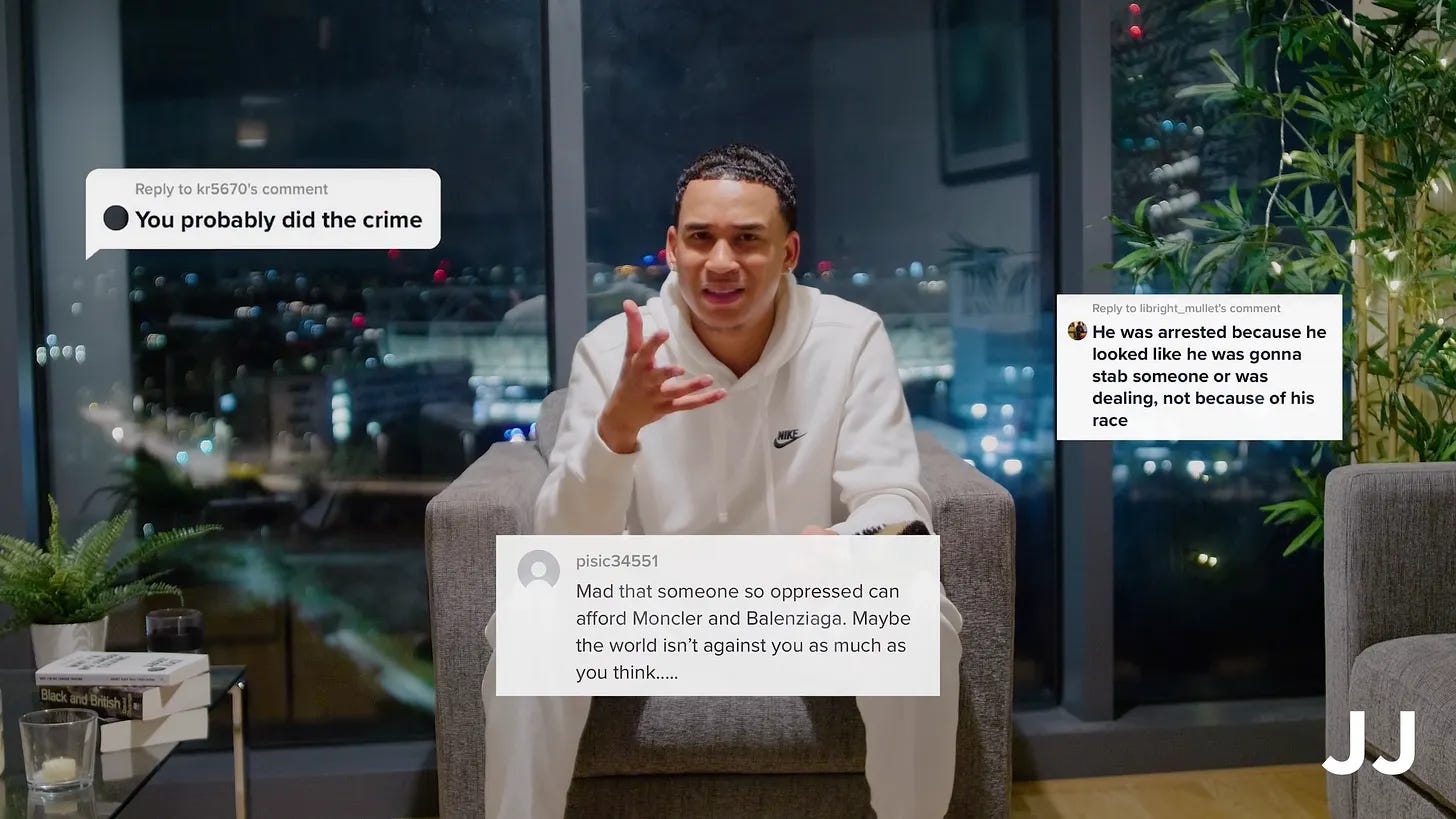
The spine of it, stated in the first minute:
“Regardless of what I wear, my skin colour is still viewed as a threat. So no matter what I acquire, no matter what I achieve, at the end of the day I will still experience racism.”
I went as far as to underline the following:
“No amount of money, no amount of success, no amount of education can protect me from racism.”
WHAT THEY ACTUALLY MEANT
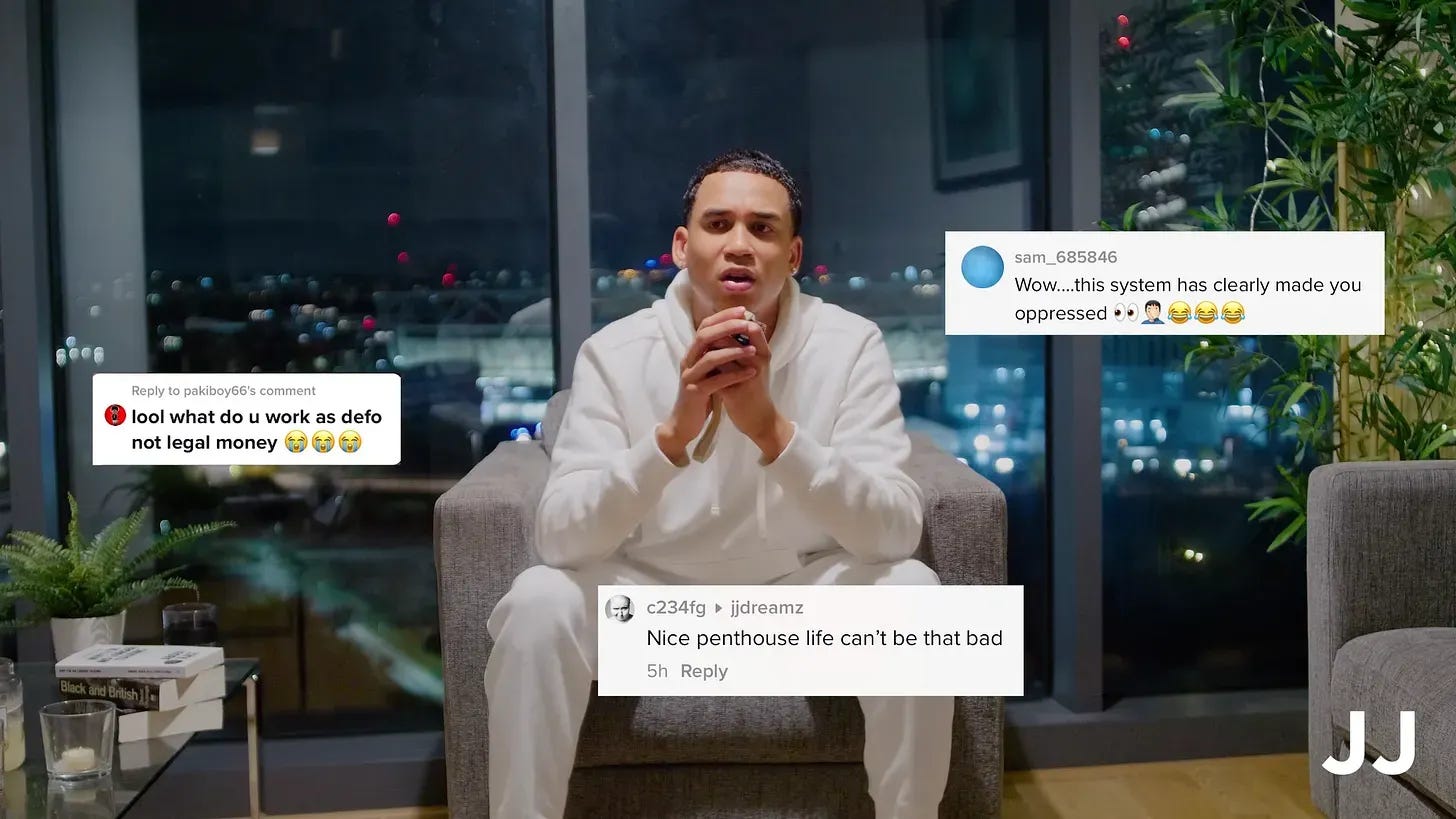
The comment is never nice coat. The comment is a disqualification.
How can you talk about oppression in that.
Mad that someone so oppressed can afford that.
Can’t be that deep if you’re wearing that.
Notice what it does. It doesn’t engage the argument. It withdraws my standing to make one.
And it works, which is why it’s used. It costs the commenter nothing and it costs me the entire conversation.
THE TRAP, STATED PLAINLY
I can’t win.
If I underdress — the general public is not going to see value in me, because my skin colour in itself is not deemed valuable in society.
However, when I then take objects that hold value in society and place that upon myself — to at least be recognised, or even be seen as a human being, so that my voice will actually be heard — then I’m also shamed for it.”
Underdress → invisible. Dress → fraudulent.
When I say “I can’t win”, I’m not being dramatic; I’m reading back the rules I’ve been given. And once you see it as a closed system rather than a complaint, the entire argument changes shape. I am not asking you to feel sorry for a man in a nice coat. I am pointing at a mechanism and asking you to find the exit.
There isn’t one. That’s the finding.
SO WHY BUY ANYTHING?
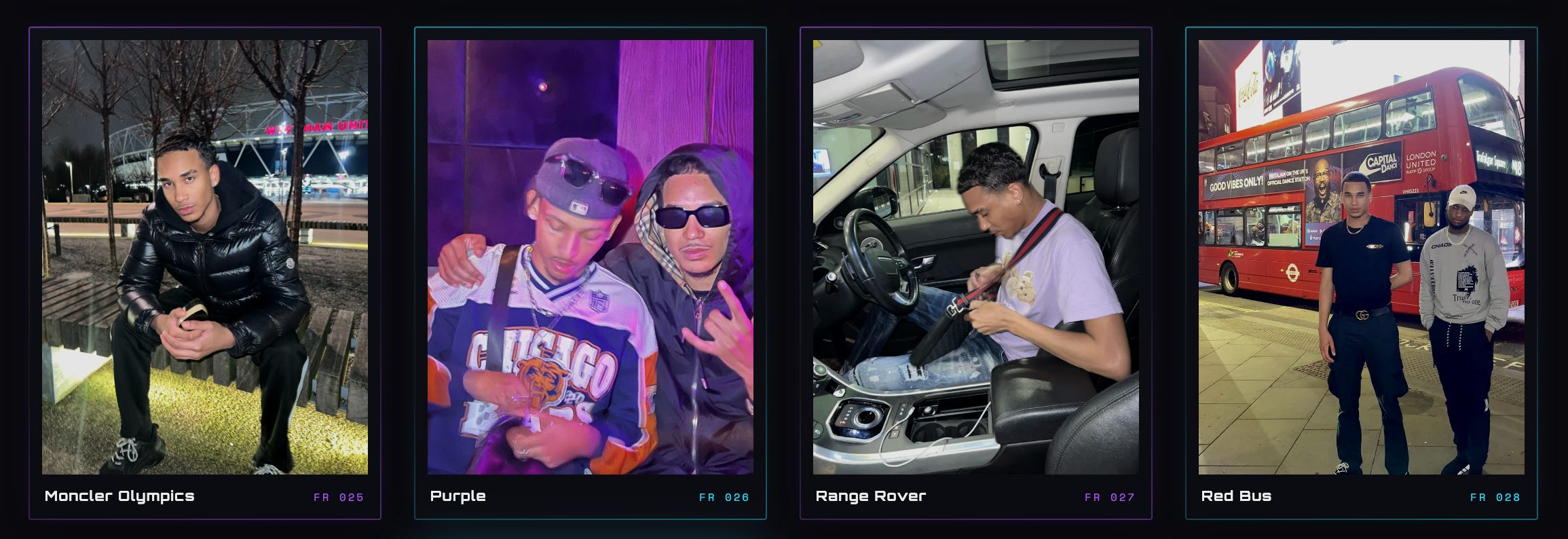
“You’re gonna look to ulterior things — you’re gonna look to other things that hold value and place that upon yourself to actually be recognised within a society.”
From “AM I REALLY FREE?” by JJ
The coat is not vanity. The coat is a sentence.
If a stranger will not extend you basic legibility on sight, you reach for a vocabulary they have already agreed to read. A recognised object says treat me as though I count in a language that requires no introduction and permits no argument. It is the fastest translation available and it works on strangers in under a second.1
And then I say the line that people fight me hardest on:
Black men deal with trauma by getting rich.
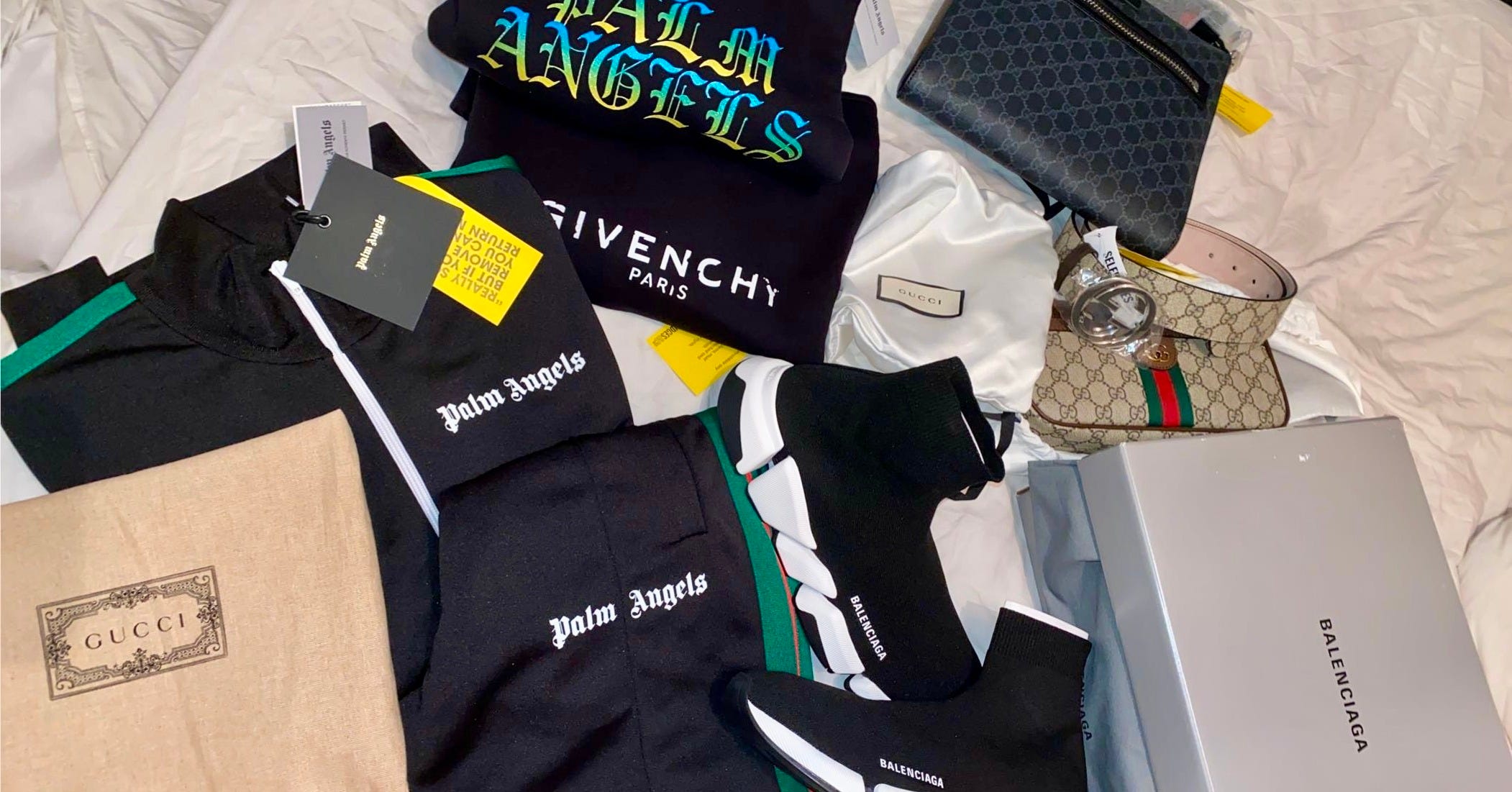
I stand by it. It is not a compliment to anybody. It is a description of what happens when you make recognition purchasable and then only sell it to some people. If dignity has a price tag, the people denied it for free will go and buy it — and then be told they’re materialistic for shopping.2
THE THING I ADMITTED THAT NOBODY QUOTES
Here’s why I trust this tape more than anything polished I’ve written since.
I concede the other side’s point, out loud, unprompted:
“There IS a correlation between what I wear and how I want to be perceived. And it’s mad, and I’m gonna admit that.”
I could have argued that clothes mean nothing to me and my critics invented the whole thing. It would have been cleaner and it would have been a lie.
Of course I dress for how I want to be read. Everybody does. The difference is that for some people that’s called style, and for me it’s called a contradiction.
And then, immediately after, the most human thing on the tape:
“This is a freaking difficult conversation to have. (It’s so intricate).”

THE PROOF, IN ONE OBJECT
“Someone wearing a Gucci cap is not gonna stop them from being racially profiled.”
Test it against anything you’ve read in the last decade. Name one institutional decision, anywhere, that a garment reversed.
I was identified by a jacket. I was not saved by one. You can walk into a police station, a courtroom, a hiring panel in head-to-toe designer and the paperwork will still say the same four or five words it was always going to say. The jacket might soften a stranger on the pavement; it does not edit the sentence that gets typed into your file.
THE LINE I ONLY FOUND THIS YEAR
Going back through the tape to build the film, I found a sentence I had completely forgotten saying, and it is the hardest one in the file:
“We live in a society where people won’t even value your life if you don’t wear certain things.”
Your life. Not your opinion, not your credibility. Your life.
This project sat in a folder called DELETED for over four years. I was twenty-two, months after being racially profiled, working out on camera that my own survival might be legible through fabric.
EVEN SO
The part I can’t dodge is this: I’m the one who put the coat on.
I am fully aware that a logo on my chest will not keep me out of a cell. I have lived the experiment. I have stood in rooms where my outfit was the least important fact about me and watched people fixate on it anyway.

Some days it’s armour, some days it’s aesthetics, some days it’s just me liking clothes and refusing to live as if every choice I make is a press release. Not everything is a statement. The problem is that the world insists on reading every outfit as evidence — of guilt, of innocence, of how hard it really is. That’s why I call these essays a description, not a prescription. I’m not offering a way out per se. I’m showing you the loop I’m currently stuck orbiting in.
AM I REALLY FREE?
If I wear nothing, I'm invisible. If I wear something, I'm a fraud. You tell me which outfit gets me heard — I'll wear it tomorrow.
— Joshua Immanuel Nyamekye Arthur
“Am I Really Free?” premieres 1 October 2026 · jjdreamss.com/film
Testimony, not fabrication.
Frantz Fanon described this half-second precisely: the Black body is read — schema assigned, threat level priced — before a word is spoken, and the reading arrives from outside, "woven … out of a thousand details, anecdotes, stories." The coat is an attempt to intervene in that half-second with the only vocabulary it accepts. Fanon, Black Skin, White Masks (1952), ch. 5.
The strategy has a name and a century of receipts. Evelyn Brooks Higginbotham coined "the politics of respectability" for the belief that impeccable presentation could purchase safety and standing for Black people — and documented both its logic and its limit: the presentation was never the thing being judged. Higginbotham, Righteous Discontent (1993).